Top all-time · #3569

Colin Morris
Personal blog · colinmorris.github.io/blogaicultureprogramming
Colin Morris writes colin_morris, a personal blog at colinmorris.github.io about ai, culture and programming. Since 2016, 20 different Hacker News readers have linked it 25 times, most often “The size of things: an ngram experiment (2017)”. The last post was in 2023, but the archive is still widely read.
Too few sampled comments (7) to say how often HN recommends it.?
Why HN links it
HN readers link his machine-learning experiments: RBM-generated names and place maps, a neural net for GitHub repo names, language-model sentence probabilities, and song-lyric self-similarity matrices.
Summarised by Claude from a sample of 7 HN comments that link here. Each comment is marked recommending, critical or neutral (citing without judging); how this works.
Most-linked posts?
- The size of things: an ngram experiment (2017)2 people · 2 mentions · first linked 2017-11-04
- Visualize Repetition in Song Lyrics2 people · 2 mentions · first linked 2017-03-15
- Compound pejoratives on Reddit2 people · 2 mentions · first linked 2022-06-29
- Show HN: Visualize song lyrics using self-similarity matrices2 people · 2 mentions · first linked 2017-03-15
- In search of the least viewed article on Wikipedia2 people · 2 mentions · first linked 2022-05-27
What Hacker News says?
If you're looking to do more analysis on this data, it would be cool to see a correlation matrix for different articles of clothing in different categories. E.g. looking at how frequently you wear certain tops/bottoms together, or bottoms/shoes. https://www.displayr.com/what-is-a-correlation-matrix/ Another example of this chart I saw recently was examining compound curse words on reddit: https://colinmorris.github.…
Comment linking /blog/compound-curse-words
on “Tracking Everything I Wore For 1 Year”Submitted Compound pejoratives on Reddit as a story · 403 points
HN discussionI really like your Hidden Unit Zoo here http://colinmorris.github.io/rbm/zoo/ as a window into what this thing is actually "thinking" about. The "top matches" for a given hidden unit are pretty helpful.
Comment linking /rbm/zoo/
on “Show HN: Neural network trained to generate GitHub repository names”- ot · 2022-05-27
Submitted In search of the least viewed article on Wikipedia as a story · 213 points
HN discussion - nl · 2016-10-20
What you want is a language model. This will give you the probability on a word by word basis. Something like [1] is pretty much state-of-the-art. It's worth noting that the kind of writing you are doing change the probability significantly. [2] shows this quite well. [1] https://colinmorris.github.io/lm-sentences/#/billion_words [2] https://colinmorris.github.io/lm-sentences/#/brown_romance
Comment linking /lm-sentences/
on “Ask HN: A tool for writing English that checks “popularity” of used sentences?” Submitted Show HN: Neural network trained to generate GitHub repository names as a story · 145 points
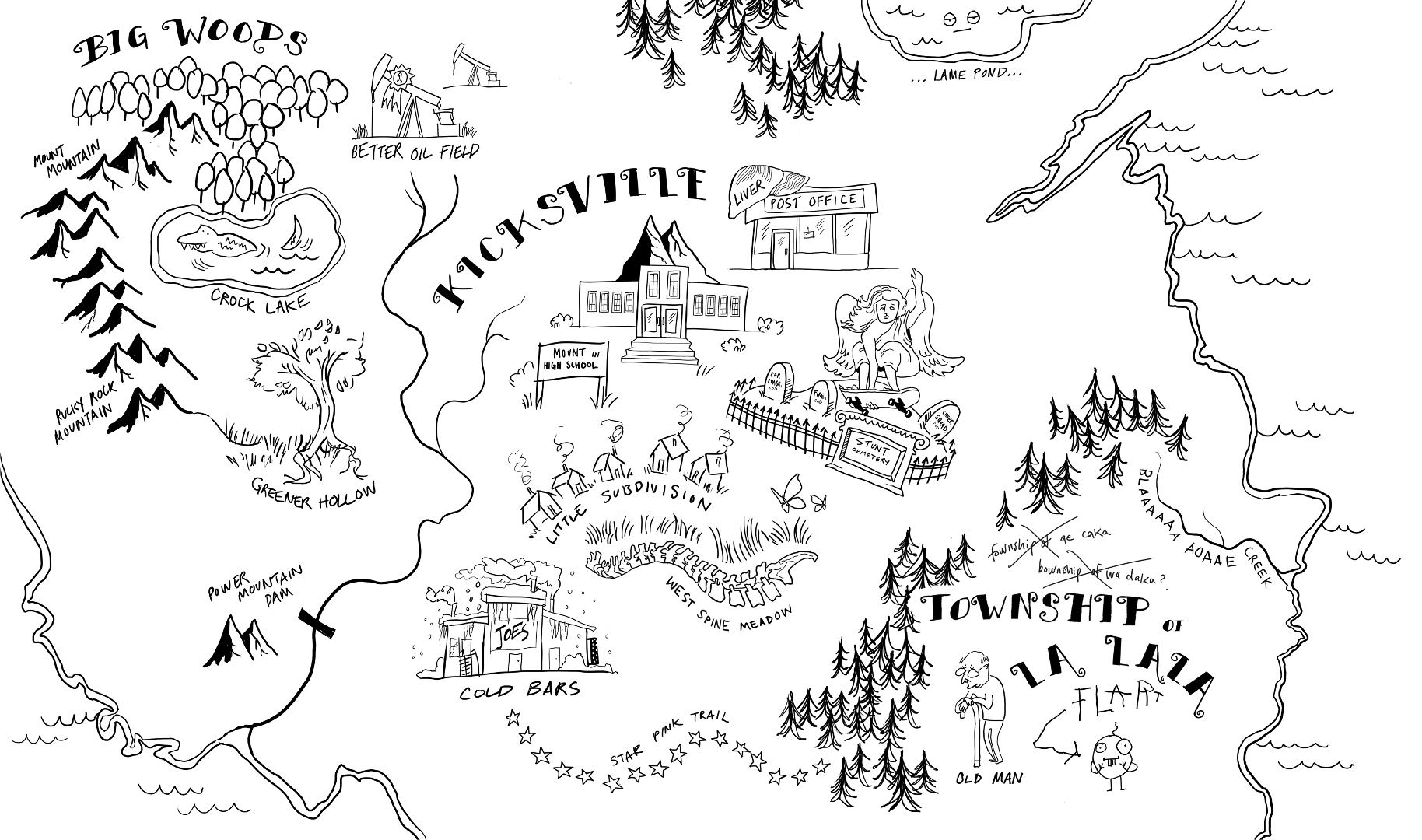
HN discussionThis is a pretty thorough description of generation, not just the classification problem that is the usual introduction to machine learning. I just loved the map of the generated place names [1] the illustrations are hilarious. [1] http://colinmorris.github.io/assets/rbm/kicksville.png
Comment linking /assets/rbm/kicksville.png
on “Dreaming of names with RBMs”Submitted The size of things: an ngram experiment (2017) as a story · 32 points
HN discussionReminded me of least viewed pages on wikipedia collections or neglected articles... See: In search of the least viewed article on Wikipedia (2022) https://colinmorris.github.io/blog/unpopular-wiki-articles (Some discussions: https://news.ycombinator.com/item?id=31524943 , https://news.ycombinator.com/item?id=37955600 )
Comment linking /blog/unpopular-wiki-articles
on “Has_not_been_viewed_much”Submitted Finding bad flamingo drawings with recurrent neural networks as a story · 31 points
HN discussionI'm not sure how easy it is to grok these by playing with them. If you're confused, the "About" section has some explanation of how the matrices are constructed and how to interpret them: https://colinmorris.github.io/SongSim/#/about Also, in case it's not clear, you can press the "+" button next to the song dropdown to open a textarea where you can paste arbitrary lyrics.
Comment linking /SongSim/
on “Show HN: Visualize song lyrics using self-similarity matrices”Submitted Hell has more than 7 circles you guys (2022) as a story · 26 points
HN discussionFun to see the Aubrey-Maturin series mentioned here; that was indeed the first thing I thought of. Killick's use of "which" always struck me as odd. I'm not entirely sure if it's the same grammatic construct as the one in the article. Here [1] is a discussion about it. The top answer argues it's just a meaningless discourse marker. It was also covered in Mark Liberman's Language Log [2]. Apparently the conjunctive "…
Comment linking /blog/which-discourse-marker
on “Is This ‘Which’ Dead?”Submitted Compound pejoratives on Reddit – from buttface to wankpuffin (2022) as a story · 23 points
HN discussionSubmitted In search of the least viewed article on Wikipedia as a story · 6 points
HN discussionSubmitted Dreaming of names with RBMs as a story · 4 points
HN discussionSubmitted The size of things: an ngram experiment as a story · 2 points
HN discussionSubmitted Finding bad flamingo drawings with recurrent neural networks as a story · 2 points
HN discussionSubmitted A tool that lets you visualize song lyrics in the form of a matrix as a story · 2 points
HN discussionSubmitted Show HN: Visualize song lyrics using self-similarity matrices as a story · 2 points
HN discussionSubmitted Show HN: Visualize word-by-word probabilities given by a neural language model as a story · 2 points
HN discussionSubmitted In search of the least viewed article on Wikipedia as a story · 1 points
HN discussionSubmitted SongSim – visualize patterns of repetition as a story · 1 points
HN discussionSubmitted Visualize Repetition in Song Lyrics as a story · 1 points
HN discussion