Top all-time · #8373

si.inc
Company blog · si.inc/postsaihardware
si.inc is the company blog at si.inc, writing about ai and hardware. Since 2024, 9 different Hacker News readers have linked it 13 times, most often “The first general computer action model”. It is still writing: the last post was on 2026-04-30, and you can follow it by feed.
Too few sampled comments (10) to say how often HN recommends it.?
Why HN links it
Commenters cite Standard Intelligence's posts as sources: one on a cloud-cost breakdown ("the heap"), one on the hertz-dev voice model, and one on fdm1, a general computer action model.
Summarised by Claude from a sample of 10 HN comments that link here. Each comment is marked recommending, critical or neutral (citing without judging); how this works.
An aligned AGI lab.
Most-linked posts?
- The first general computer action model5 people · 6 mentions · first linked 2026-02-23
- Building the heap: racking 30 petabytes of hard drives for pretraining2 people · 2 mentions · first linked 2025-10-01
What Hacker News says?
It's expensive if you calculate what it would cost for a third party to compete with. Or see e.g. this graph from a recent HN submission: https://si.inc/posts/the-heap/#the-cost-breakdown-cloud-alte...
Comment linking /posts/the-heap/
on “Fire destroys S. Korean government's cloud storage system, no backups available”Submitted Building the heap: racking 30 petabytes of hard drives for pretraining as a story · 412 points
HN discussionStandard Intelligence released one two years ago: https://si.inc/posts/hertz-dev/ It's only 8.5B and doesn't sound like it's quite conversational.
Comment linking /posts/hertz-dev/
on “GPT‑Live”Submitted Hertz-dev, the first open-source base model for conversational audio as a story · 296 points
HN discussionDidn't Standard Intelligence release a duplex model two years ago? Sounds disingenuous to market this as a new generation of voice models, when it is really OpenAI finally catching up to the current generation after two years. https://si.inc/posts/hertz-dev/
Comment linking /posts/hertz-dev/
on “GPT‑Live”Submitted The first general computer action model as a story · 1 points
HN discussionNot quite ready for primetime yet, but that's basically https://si.inc/posts/fdm1/
Comment linking /posts/fdm1/
on “We Gave GPT 5.6 Sol a Real Business. It Lied, Spammed, and Lost $447”See: https://si.inc/posts/fdm1/ If they captured display output as well, it could be a very useful dataset for generalized computer use.
Comment linking /posts/fdm1/
on “Meta to start capturing employee mouse movements, keystrokes for AI training”This is kind of fun, something I've been thinking about over the last couple days. This is one area that makes me feel like our current LLM approach is just not quite general enough. Yes, developers and power users love the command-line, because it is the most efficient way to accomplish many tasks. But it's rarely (never?) our only tool. We often reach for TUIs and GUIs. It's why approaches like this get me excited…
Comment linking /posts/fdm1/
on “Show HN: TUI-use: Let AI agents control interactive terminal programs”This turns out to be a more and more important primitive for companies who are building their own models [1]. [1] https://si.inc/posts/the-heap/
Comment linking /posts/the-heap/
on “Don't rent the cloud, own instead”I wonder if the underlying improvements in visual language learning will allow for even more efficient search. The First Fully General Computer Action Model -> https://si.inc/posts/fdm1/
Comment linking /posts/fdm1/
on “Show HN: Gemini can now natively embed video, so I built sub-second video search”> Is there progress happening in that trajectory? There was a recent Hackernews post which had a novel approach about making agents interact with GUI/computer-use https://news.ycombinator.com/item?id=47125014 : The First Fully General Computer Action Model : https://si.inc/posts/fdm1/ Hope this helps
Comment linking /posts/fdm1/
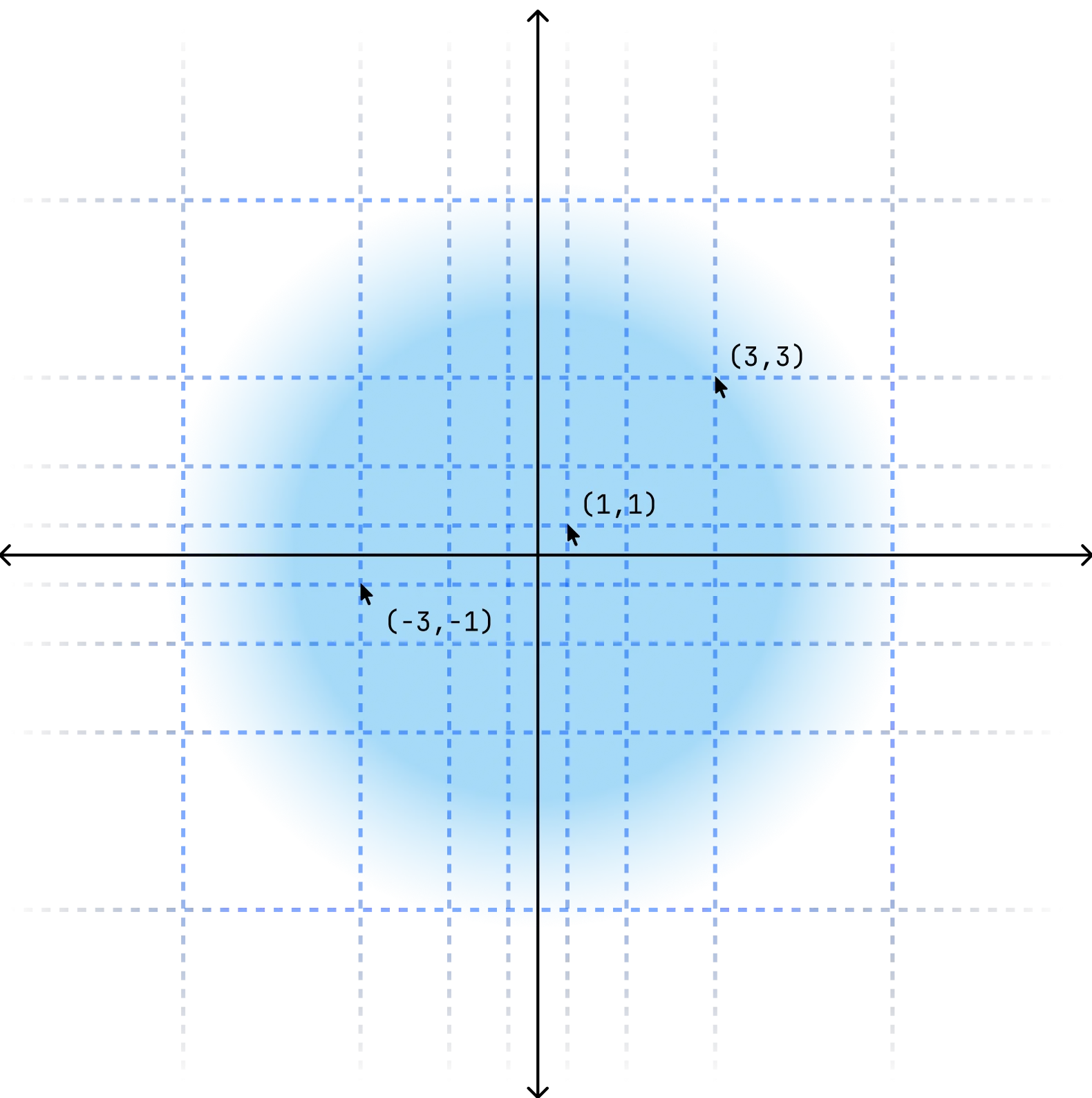
on “You Need to Rewrite Your CLI for AI Agents”good question! we use exponential binning (map the mouse movements onto a plane with exponentially increasing tick marks https://si.inc/fdm1/exponential_binning.webp ) but tried a bunch of other methods (linear creates too many tokens for the model to learn well). Polar coordinates seem like a better solution but empirically didn't work well because the tokens got too coarse too fast.
Comment linking /fdm1/exponential_binning.webp
on “The first general computer action model”