Top all-time · #8858

The Last Pickle
Company blog · thelastpickle.com/blogdataprogramming
The Last Pickle is the company blog at thelastpickle.com, writing about data and programming. Since 2016, 9 different Hacker News readers have linked it 9 times, most often “Meltdown's Impact on Cassandra Latency”. The last post was in 2023, but the archive is still widely read.
Too few sampled comments (4) to say how often HN recommends it.?
Why HN links it
HN commenters link The Last Pickle's posts on Cassandra and distributed systems, including data modelling mistakes, Discord's message storage, logging architecture and tail latency. The comments discuss those topics rather than judging the writing.
Summarised by Claude from a sample of 4 HN comments that link here. Each comment is marked recommending, critical or neutral (citing without judging); how this works.
Expert Apache Cassandra consulting since 2011.
Most-linked posts?
- Meltdown's Impact on Cassandra Latency3 people · 3 mentions · first linked 2018-01-10
What Hacker News says?
> My concerns with Cassandra are precisely here: this is easy to misuse it. You get this massively scalable (to thousands of nodes and tens of millions of operations per second) database for free, and all you have to do is have your developers read about it before they use it. Is that expecting too much? Let me ask this, then: It's an OSS project. Let's pretend I'm a committer or on the PMC, and I'd like to fix this…
Comment linking /blog/2016/09/15/Null-bindings-on-prepared-statements-and-undesired-tombstone-creation.html
on “How Discord Stores Billions of Messages Using Cassandra”Submitted Should you use incremental repair in Cassandra? as a story · 34 points
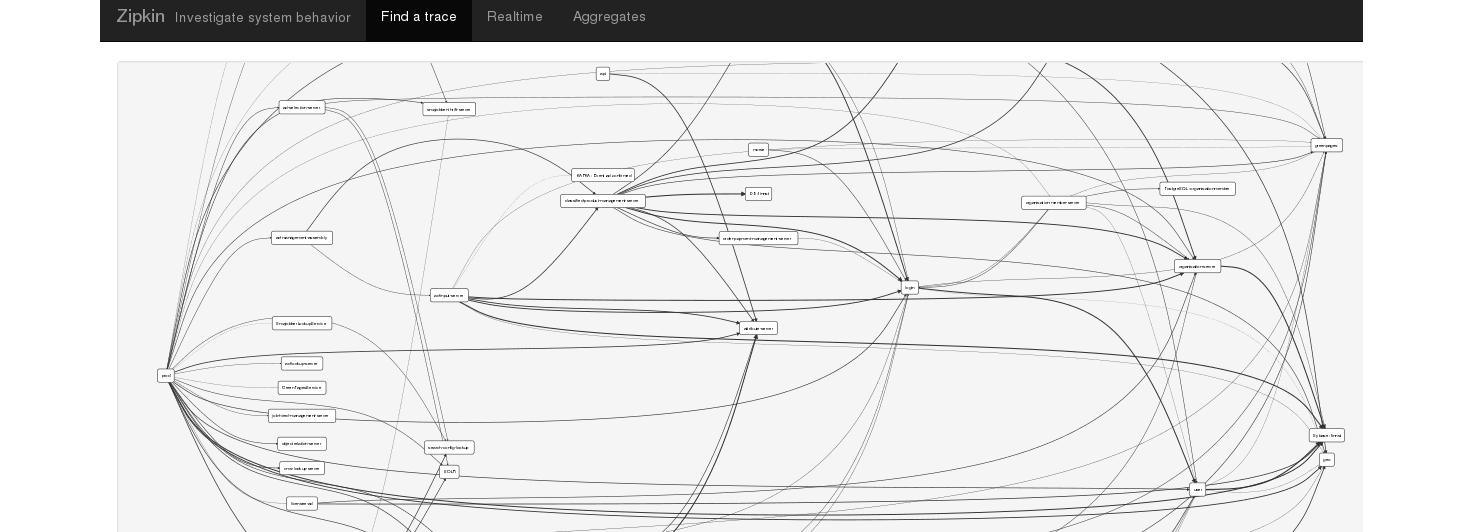
HN discussionZipkin is great. It's pretty simple to set up, and you can instrument pretty much anything to send data to it. We made it a part of our internal httpclient and Kafka client so most teams get the tracing for free. You can even visualize the internals of Cassandra with zipkin. :) There's support for a Spark-job that generates a visual map of all your services' dependencies[0] where the strength of their relationship i…
Comment linking /images/using-zipkin-graph.png
on “Distributed Logging Architecture in the Container Era”Submitted Garbage Collection Tuning for Apache Cassandra as a story · 4 points
HN discussionThere are advantages for soft deletes for CRUD architecture, but are there any for CQRS/ES (Event Sourcing)? I guess if your read model is based on RDBMS then it makes sense, otherwise it depends on the database system in question (i.e. some NoSQL databases like C*[1] and Riak[2] are implementing deletes by writing special tombstone values, which is kind of soft-delete but on the implementation level - but you can't…
Comment linking /blog/2016/07/27/about-deletes-and-tombstones.html
on “Common data model mistakes made by startups”Submitted Meltdown's Impact on Cassandra Latency as a story · 3 points
HN discussionTake a look at this https://dl.acm.org/doi/pdf/10.1145/3341301.3359640 ; shows how newer kernels are slower. I have seen supercomputers like `summit` use linux 2.xx . There are two performance problems presented here. One is the fact that the OS waits till a static memory bank water-level before triggering a cleanup. The second is the one you pointed out; here again one thing to consider is cassandra's compression c…
Comment linking /blog/2018/08/08/compression_performance.html
on “So you care about tail latency?”Submitted Meltdown's Impact on Cassandra Latency as a story · 2 points
HN discussionSubmitted Meltdown's Impact on Cassandra Latency as a story · 1 points
HN discussion