Top all-time · #3074

Digilent
Company blog · digilent.com/bloghardwareprogramming
Digilent is the company blog at digilent.com, writing about hardware and programming. Since 2021, 25 different Hacker News readers have linked it 44 times, most often “Analog Discovery 3: Oscilloscope, Waveform Gen, Logic Analyzer and Power Supply”. No feed was found, so read it on the site itself.
Too few sampled comments (28) to say how often HN recommends it.?
Why HN links it
Digilent's site hosts its FPGA and electronics development boards, test instruments, reference docs, tutorials and blog. HN links mostly point to product pages and learning material rather than the blog posts.
Summarised by Claude from a sample of 28 HN comments that link here. Each comment is marked recommending, critical or neutral (citing without judging); how this works.
Shop now for USB test and measurement devices, FPGA development boards, programming solutions and educational products.
Most-linked posts?
- /reference/pmod/start2 people · 2 mentions · first linked 2023-01-11
- /shop/arty-a7-artix-7-fpga-development-board/2 people · 2 mentions · first linked 2022-07-22
- /shop/nexys-video-artix-7-fpga-trainer-board-for-multimedia-applications/2 people · 2 mentions · first linked 2022-07-22
- Analog Discovery 3: Oscilloscope, Waveform Gen, Logic Analyzer and Power Supply2 people · 2 mentions · first linked 2023-05-31
- /shop/analog-discovery-2-100ms-s-usb-oscilloscope-logic-analyzer-and-variable-power-supply/2 people · 2 mentions · first linked 2022-08-07
What Hacker News says?
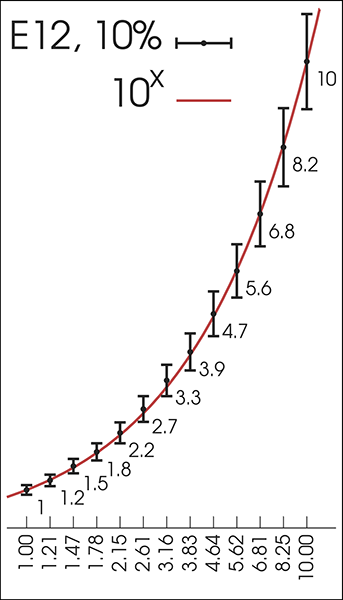
The image it what made it clear to me. https://digilent.com/blog/wp-content/uploads/2015/01/E12_ser...
Comment linking /blog/wp-content/uploads/2015/01/E12_series_tolerance.svg_.png
on “Why do electronic components have such odd values? (2021)”Submitted Why do electronic components have such odd values? (2021) as a story · 444 points
HN discussionSure thing. I can't share any of my employer's schematics, but here's one that's drafted in a similar style: https://digilent.com/reference/_media/reference/programmable... There's no hierarchy to the schematic. Pages are inserted/deleted in a freeform way, the same as you'd do with a Word document. Reference designators are in a global namespace, and so are net names. It feels like it's a pretty common drafting sty…
Comment linking /reference/_media/reference/programmable-logic/arty-a7/arty_a7_sch.pdf
on “Kicad 6: new feature review for open source EDA tool”Submitted The Analog Discovery Pro: Why Did We Make It? as a story · 3 points
HN discussionLinks for the lazy: PMOD at Digilent [1] and Wikipedia [2]. There are a lot of modules using it! [1]: https://digilent.com/reference/pmod/start [2]: https://en.wikipedia.org/wiki/Pmod_Interface
Comment linking /reference/pmod/start
on “My MEGA65 is finally here”Submitted Why communication might be the missing link in engineering education as a story · 2 points
HN discussionFor beginner I'd highly recommend this new book by Jonathan Bartlett, Electronics for Beginners: A Practical Introduction to Schematics, Circuits, and Microcontrollers: https://www.apress.com/gp/book/9781484259788 The book comprehensively covers the fundamentals of analog and digital electronics including the basic of amplifier topic that most of the electronics for beginners books ignored. For electronics workbench…
Comment linking /blog/the-creation-of-the-analog-discovery-pro
on “A Summary of Electronics”Submitted RTL meaning: What is Register Transfer Level and how to use it? as a story · 2 points
HN discussionDigilent (now part of National Instruments) has some good HW and SW (with accompanying tutorials) for students. * HW - Analog Discovery 2 or Analog Discovery Studio - https://digilent.com/shop/test-and-measurement-equipment/usb... * SW - Multisim - https://digilent.com/shop/ni-multisim-student-edition-circui... * Tutorials - https://learn.digilentinc.com/
Comment linking /shop/ni-multisim-student-edition-circuit-design-and-simulation-software
on “A Summary of Electronics”Submitted Oscilloscope/AWG/Logic Analyzer: Analog Discovery 3 as a story · 1 points
HN discussionA clever zero-cost alternative I've seen some manufacturers use is a 1xN PTH footprint with every other hole offset slightly (~20 mil) to the side. The misalignment is just enough to make a straight pin header get stuck in the holes. There's an example of this on Digilent's Arty development board, at the top of the board between JB and JC: https://digilent.com/shop/arty-a7-100t-artix-7-fpga-developm...
Comment linking /shop/arty-a7-100t-artix-7-fpga-development-board/
on “SPI Flash”Submitted Analog Discovery 3: Oscilloscope, Waveform Gen, Logic Analyzer and Power Supply as a story · 1 points
HN discussionI’ve done nand2tetris a couple times (taking good notes the second time) and coincidentally played through nandgame.com for the first time this weekend. I’ve been trying out what people have done with bare metal Forth on a raspberry pi using a frame buffer and using C libraries to get input from a USB keyboard. I don’t really like having such dependencies so I was just thinking I should get out my Arty FPGA with the…
Comment linking /reference/learn/programmable-logic/tutorials/arty-z7-hdmi-demo/start
on “Exploring FPGA Graphics”Submitted Reading Generated Data in a Real-Time Distributed System as a story · 1 points
HN discussionWhat frequencies, how many channels of analog/digital, what bit depth, how much memory, etc? What is your actual application? And what do you mean "PC attached" here? What is your budget? I don't think you are going to find much for less than a Picoscope. Maybe something like the Analog Discovery 3? Under 400 USD, 2 channel oscilloscope (30 MHz), 16 channel digital, 2 channel arbitrary waveform generator (12 Mhz) ht…
Comment linking /shop/analog-discovery-3/
on “TinySA – small spectrum analyzer and signal generator”Nice. You also need to get the BNC Adapter board and probes for AD3 (available separately or as part of the pro bundle). Might also want to take a look at other available adapters for AD3. AD3 resources (docs/tutorials/accessories/books etc.) - https://digilent.com/reference/test-and-measurement/analog-d...
Comment linking /reference/test-and-measurement/analog-discovery-3/start
on “Ask HN: What cool skill or project interests you, but feels out of reach?”See my previous comment here for how to get started - https://news.ycombinator.com/item?id=33628025 I highly recommend downloading Understanding Signals with the Propscope from Parallax (available for free online) and following the tutorials from it with an Arduino+Analog Discovery 2/3 device. You can use the Digilent "Real Analog" learning course along with it - https://digilent.com/reference/learn/courses/real-ana…
Comment linking /reference/learn/courses/real-analog/start
on “Ask HN: What cool skill or project interests you, but feels out of reach?”THIS. It might surprise readers but you can hire someone with a BSEE who is fresh out of college and really doesn't "get" any of this. And a good tool and good curriculum material can go a long way toward turning them into functional engineers. This is especially helpful for the ones who cheated their way through school and are now SHOCKED that they are expected to both know and even understand this stuff to do thei…
Comment linking /reference/test-and-measurement/analog-discovery-2/start
on “Korg NTS-2 DIY oscilloscope and wave generator kit”The open source toolchain doesn't quite support the PCIe interface yet but all the other stuff should work in theory. The best place to see what works is the F4PGA examples documentation at < https://f4pga-examples.readthedocs.io/en/latest/building-exa... >. If you want to start with fully open source tools on a Xilinx 7 series FPGA the best option is the Digilent Arty A35T board < https://digilent.com/shop/arty-a7-…
Comment linking /shop/arty-a7-artix-7-fpga-development-board/
on “NiteFury – An Artix-7 FPGA with its own DDR3 RAM right in your laptop”You can also grab an Arty from Digilent. [1] [1] https://digilent.com/shop/arty-a7-artix-7-fpga-development-b...
Comment linking /shop/arty-a7-artix-7-fpga-development-board/
on “NiteFury – An Artix-7 FPGA with its own DDR3 RAM right in your laptop”What exactly are you aiming to build? DP/HDMI output and Ethernet aren't exactly beginner topics in FPGA (though you may be able to cobble something together using pre-existing components). The Nexsys Video would give you what you need: https://digilent.com/shop/nexys-video-artix-7-fpga-trainer-b... (though out of stock) The DE10-Nano gives you both HDMI (though not 2.0) and Ethernet: https://www.terasic.com.tw/cgi-…
Comment linking /shop/nexys-video-artix-7-fpga-trainer-board-for-multimedia-applications/
on “NiteFury – An Artix-7 FPGA with its own DDR3 RAM right in your laptop”https://digilent.com/shop/all-products/ These guys target the education market and most of their boards are compatible with the free version of the Xilinx toolchain. The boards have a modular expansion connector and they sell lots of compatible expansion modules for different I/O mechanisms, both electrical and human (lights, buttons, displays, etc.) This one checks your boxes: https://digilent.com/shop/nexys-a7-fpg…
Comment linking /shop/nexys-a7-fpga-trainer-board-recommended-for-ece-curriculum/
on “NiteFury – An Artix-7 FPGA with its own DDR3 RAM right in your laptop”If you haven't done FPGA work before, you certainly want to start with something small and cheap - it will keep you busy for a long time learning a completely different type of development process. Lattice ECP5 is popular with hackers because there is a reasonably well supported open-source tool chain via Yosys. As tempting as an open-source toolchain is, it is NOT friendly for beginners . You can also use the Latti…
Comment linking /shop/cora-z7-zynq-7000-single-core-and-dual-core-options-for-arm-fpga-soc-development/
on “NiteFury – An Artix-7 FPGA with its own DDR3 RAM right in your laptop”Probably not what you mean, but you could use a USB logic analyzer. https://digilent.com/reference/test-and-measurement/digital-...
Comment linking /reference/test-and-measurement/digital-discovery/demos/decoding-vga-signals-with-logic-analyzer
on “Live Streaming a Macintosh Plus”Most of my industrial career, I've used things like this for actual systems beyond prototyping: https://www.ni.com/en-us/support/model.ni-9870.html They go through an FPGA and then exposed via drivers over Ethernet or USB and are rock solid. You can access the serial data on the FPGA or you can use a default driver/personality for them that makes the module plug and play. There are other products I've used that expo…
Comment linking /reference/pmod/pmodrs232/start
on “Really Prolific?”A good device is the Digilent Analog Discovery 2: https://digilent.com/shop/analog-discovery-2-100ms-s-usb-osc...
Comment linking /shop/analog-discovery-2-100ms-s-usb-oscilloscope-logic-analyzer-and-variable-power-supply/
on “Mobile Electronics Workbench (2017)”For modern and versatile oscilloscope I think nothing beat this new Digilent Analog Discovery Pro but pricier, however the extra functionalities and flexibility are really worth it [1],[2]. These extra functionalities typical of electronics workbench include multimeter, oscilloscope, power supply, logic analyzer, protocol analyzer, logger, wave generator and spectrum analyzer. It can even operates standalone with th…
Comment linking /blog/the-creation-of-the-analog-discovery-pro/
on “$60 PC Oscilloscope Review”> How does one actually program on an FPGA? Traditional: as others have pointed out, create design in Hardware Description Language (HDL). Simulate / test. Use tool(s) of choice (or usually no choice) to synthesize. Resulting bitstream written to FPGA. Ref https://en.wikipedia.org/wiki/Field-programmable_gate_array#... Somewhat newer: High-Level Synthesis (as detailed in the OP). Similar to HDL, but more abstracted…
Comment linking /shop/boards-and-components/system-boards/fpga-boards/
on “Parallel Programming for FPGAs”This board: https://digilent.com/reference/programmable-logic/zybo-z7/st... Because the chip is a processor and FPGA, you can use the FPGA for doing tests and processing without complicated interfaces. Both access the RAM and can work with it!
Comment linking /reference/programmable-logic/zybo-z7/start?srsltid=AfmBOopnYfNXfAlTBuzRTskhRmE6SILBJ5nO5NUZ0Wd9GdvaNiru_xQk
on “Getting Started with FPGAs”I used a small FPGA when I needed to modulate a signal. Initially some people tried to use a microcontroller for the same purpose, but there was too much variance in the timing. In fact, initially even the built in silicon oscillator for the FPGA board was too inaccurate, needed to use a plug in crystal to improve the bit error rate. Used this board: https://digilent.com/reference/programmable-logic/basys-2/st...
Comment linking /reference/programmable-logic/basys-2/start
on “Hardware FPGA DPS-8M Mainframe and FNP Project”